
This week I spent a fantastic couple of days listening to the Outcry Ensemble recording Stephen Dodgson’s Bassoon Concerto, Clarinet Concerto, Symphony in Eb (a brilliantly mature RPS award-winning work written when Dodgson was 25 or so) and Idyll for strings at St John’s Upper Norwood in southeast London. The orchestra under James Henshaw’s direction grasped Dodgson’s idiom brilliantly, finding all the colour, energy, grit and beauty of pieces and bringing them vibrantly to life. And all produced under the sharp eye and ear of Sir John Rutter and in the perfect setting of St John’s.
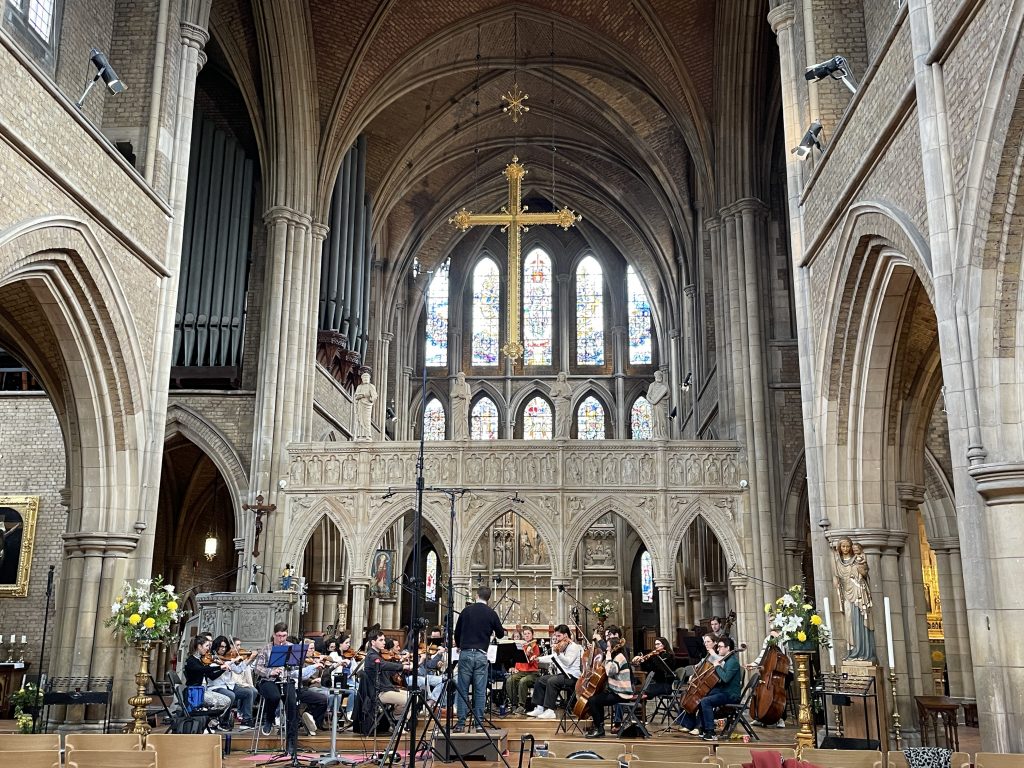
Outcry Ensemble recording at St John’s Upper Norwood
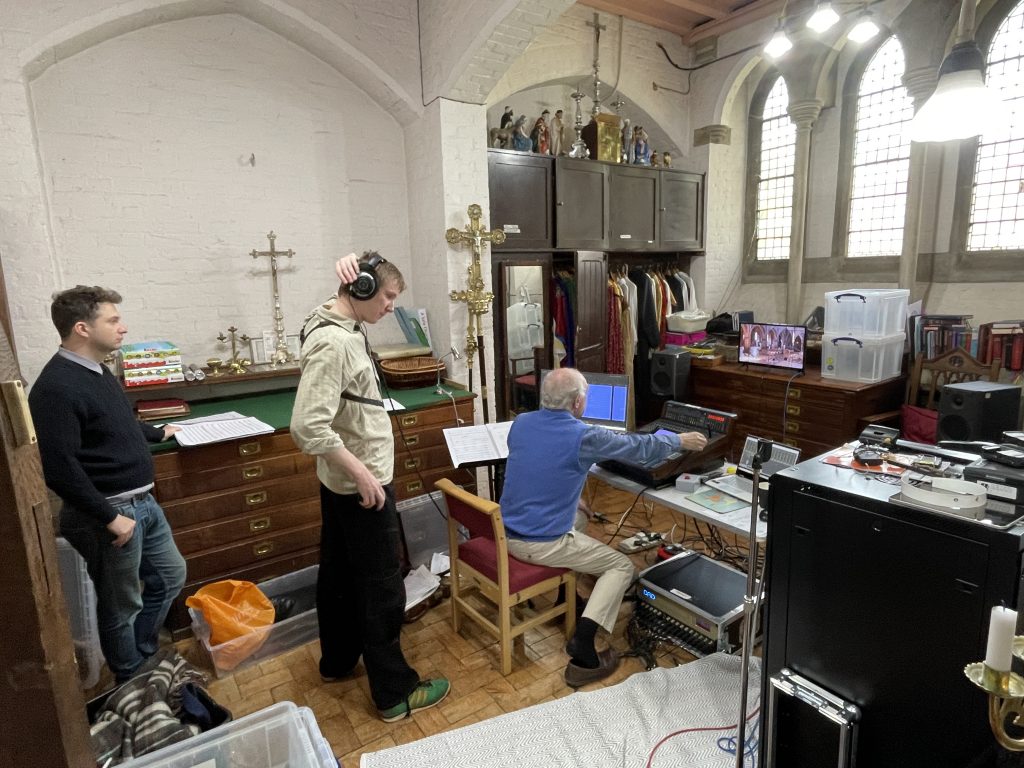
James Henshaw, Patrick Bolton and Sir John Rutter listen back in the control room
During the recording sessions, I caught up with the two soloists Patrick Bolton (bassoon) and Lewis Graham (clarinet) as well as James Henshaw, Sir John Rutter and several of the other players to get their impressions of Stephen Dodgson’s music.
They described him as having a varied language but distinctly his own: dark, funny, gritty, charming and witty, profound, accessible and beautiful and, as Henshaw said, ‘unlike anything I’ve heard before’. But very definitely ‘English’.
 There were elements post-romantic meeting neo-classical with modernist flare. At times quite filmic in its characterful and quixotic gestures, the music often has harmonies layered on top of each other – without a single fixed key, so not necessarily tonal but with ‘hooks’ to hang on to – with instances where the wind, for example, were effectively in one key while strings were layered on top in another. There’s a deliberate uncertainty from the consonant to dissonant – so the music has a real rawness to it. And these interesting clashes and contrasts render the music very ‘sharp and fresh’.
Bolton delighted in Dodgson’s exploration of the breadth of the bassoon in the concerto – the extremities of the instrument. He described how the concerto could be quite lyrical and soulful but also had a very characterful side – spiky articulations, exciting rhythmic elements – with a fun, joyful last movement rounding off in a spirited way.
Several players described the ‘journey’ Dodgson takes you on. He has a long vision as he builds the music. And it’s constantly absorbing – there’s ‘something about the shapes that holds the attention’ – it’s ‘emotionally very direct’ and it was ‘really inspiring to be the first group to record these works’.
Cleverly written. Clearly defined. A man who understood his craft.
Lewis Graham’s final word: ‘This will be first recording of its kind and what a privilege to do it with James Henshaw and Sir John Rutter.’
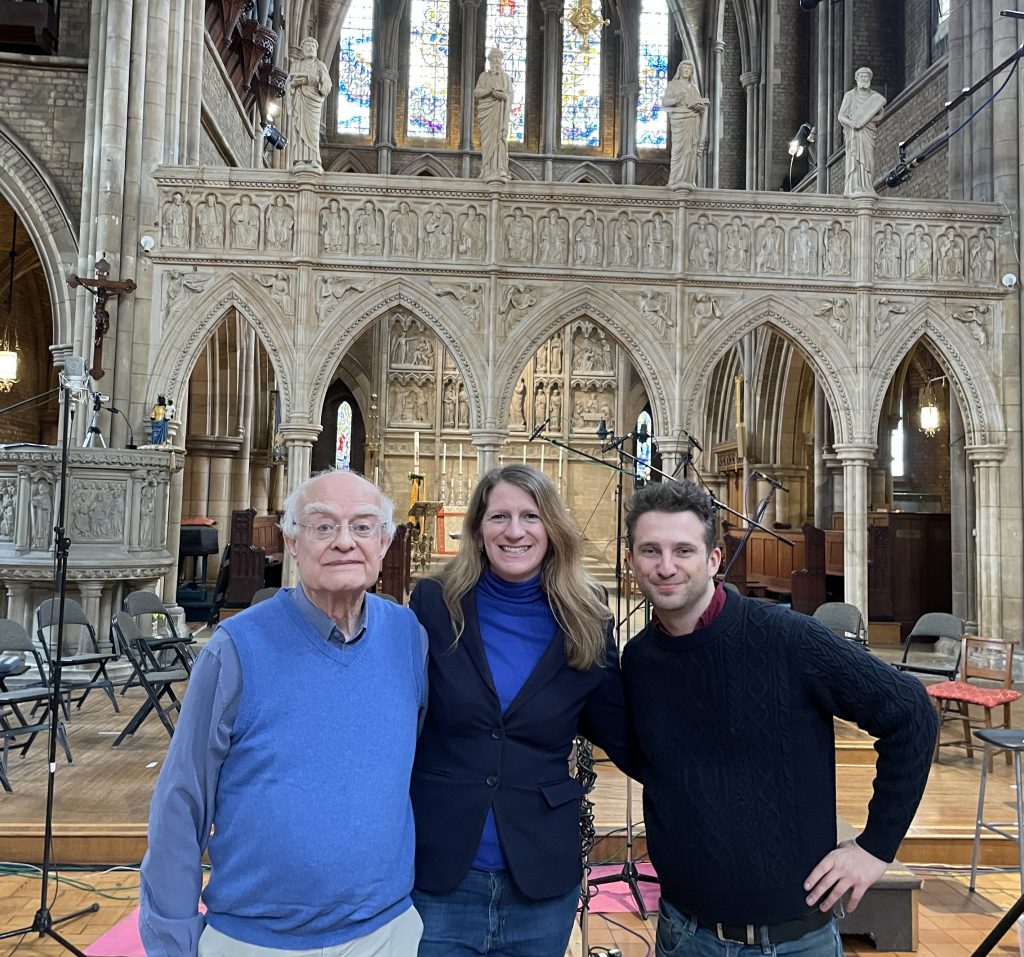
It’s a wrap! Sir John Rutter, Leonora Dawson-Bowling (Stephen Dodgson Charitable Trust) and James Henshaw


